

On Tuesday, October 20, at seven in the morning in London, a lot of people tried to pay for their coffee with a Revolut card and couldn't. They couldn't withdraw cash from ATMs, make transfers, or top up their cards either. Lloyds and HSBC customers had trouble getting into their apps. For about six hours, a significant part of British banking was, for practical purposes, out of service.
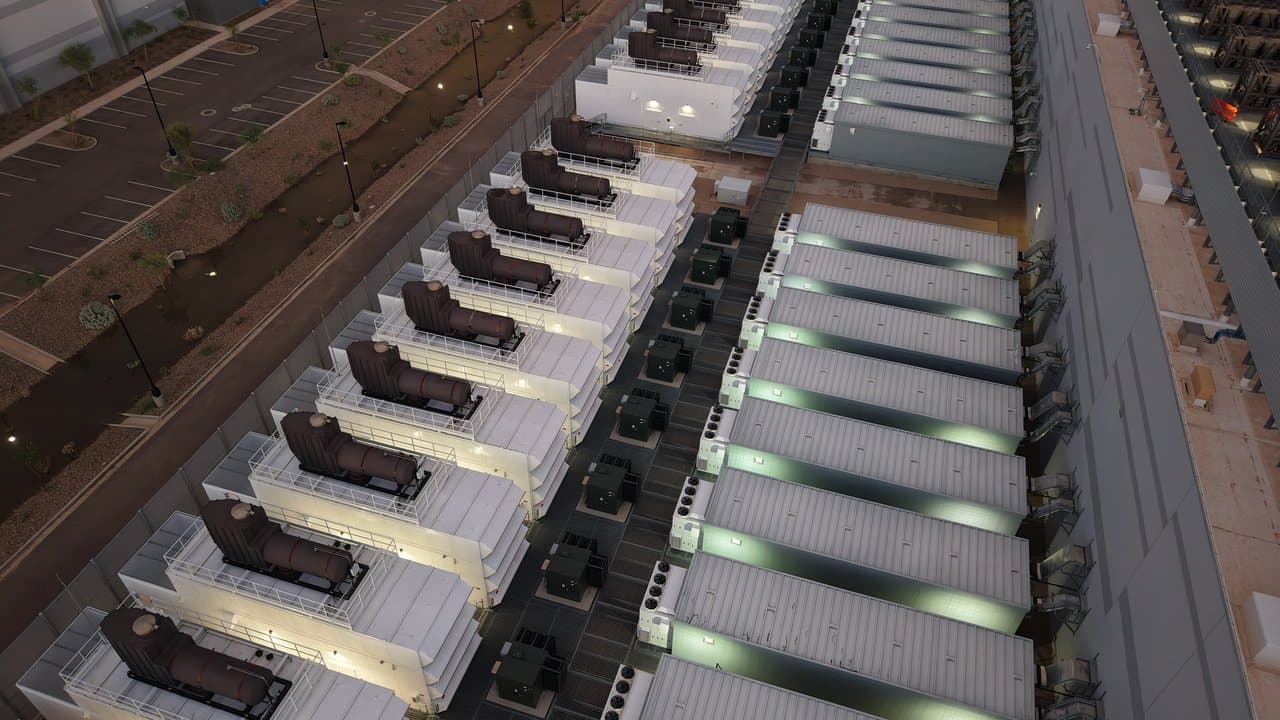
The cause wasn't an attack, or a bug in a deployment, or a human error in a configuration. It was a diesel generator that didn't start.
It's worth looking at this calmly, because it's one of those incidents that gets read quickly as "the cloud went down" and then filed away. And I think it has quite a bit more to teach those of us who design financial systems, especially in a country like Chile, where migrating critical workloads to the public cloud is no longer a debate but a reality.
What happened, according to Google's own report
Google published a fairly detailed preliminary incident report. The sequence, in short, is this:
- There was a power grid interruption at the datacenter hosting the
europe-west2-bavailability zone. - The load moved, as it should, to the UPS batteries while the emergency generators started up.
- The automation system that was supposed to orchestrate the startup and the transfer to the generators (a PLC, programmable logic controller) failed. And not just the primary one: the backup one too.
- When the batteries ran out, the servers, network, and storage in that zone shut down.
- Traffic automatically shifted to the other zones in the region. And that's where the second blow came: the avalanche of redirected workloads, database failovers, and compute jobs saturated the capacity of the zones that were still alive, with admission queues, failovers that took a long time to complete, and 500 and 503 errors across the region.
In total, 6 hours and 10 minutes of degradation. The outage affected Revolut, Lloyds and HSBC, among others, and according to the BBC it also hit websites and other services in the United Kingdom.
What strikes me most is point 5. A failed zone is a scenario everyone claims to have covered. What many haven't covered is what happens in the zones that remain when all their neighbors try to move into the same house at the same time.
Three zones are not three lifeboats
For years, the standard answer to "what happens if the datacenter goes down?" in cloud architectures has been: "we're multi-AZ." Deployment across three availability zones, a load balancer in front, a database with a synchronous replica, and done.
It's a good foundation. But the London incident shows three assumptions we tend to take for granted and that don't always hold:
1. That zones are independent in everything. They are in power and physical network, by design. But the report mentions that the regional control planes were making calls to metadata and catalog components that lived in the failed zone, and those calls started timing out. In other words: there were cross-dependencies that weren't visible until the zone disappeared. If that happens to the provider, who designs its infrastructure with an enormous level of rigor, it's reasonable to assume it also happens to us with our own services.
2. That spare capacity exists when you need it. Designing for N+1 zones only works if the other zones can absorb the load from the one that went down. If each zone runs at 70% under normal conditions, losing one means asking the other two to run at 105%. And you're not the only customer who will ask for that capacity in that very minute. Failover isn't free: it's a competition for resources with every other customer in the region.
3. That the backup of the backup works. The primary and backup PLCs failed together. It's the classic common-mode failure problem: two redundant components that share design, software, or conditions tend to fail for the same reason and at the same time. Redundancy without diversity is, many times, the same failure duplicated.
None of this is new in theory. What's new is seeing it happen, documented, at a top-tier provider and with large banks in the line of fire.
Responsibility isn't outsourced
There is a sentence in the Reuters piece that, as a banking architect, I find to be the key to everything: under British rules, banks are ultimately responsible for the services they deliver to their customers, even when they depend on third parties.
In other words, for the customer who couldn't pay at the supermarket, it makes no difference whether the problem was a PLC in a London datacenter. The one who failed to deliver was their bank.
The regulatory reaction was immediate. The European Banking Authority contacted Google to understand the impact on European Union institutions, the UK's FCA said it was working with Google, and the UK Parliament's Treasury Committee wrote that same day to the Bank of England and the FCA to ask how they will use their new powers. Important context: in July, the UK designated Microsoft, Google Cloud, AWS, and Oracle as critical providers to the financial sector, and the European Union had done something similar the previous year with 19 technology companies. This outage is, according to Reuters, the first major test of those regimes.
What's interesting is that those frameworks supervise the provider, but they don't take the responsibility away from the bank. It's a two-layer logic: the regulator makes sure the provider is robust, and the bank remains obligated to design as if the provider could fail. Because it will.
And in Chile?
In Chile, the reference is Chapter 20-7 of the Updated Compilation of Rules of the CMF, on service outsourcing. Its section on the cloud is quite clear: the bank's board must state every year the risk tolerance it is willing to assume in this type of outsourcing, and if the service is strategic or critical, the institution must perform enhanced due diligence on the provider: reputation and experience, international security and business continuity certifications, direct contracts, legal reports on the jurisdictions involved, available audits, isolation, and encryption. The CMF has also been updating that chapter this year.
I think it's a good foundation, and in practice it forces teams to have serious conversations before moving anything critical. But reading the London incident, I feel that due diligence on the provider is only half the job. The other half is due diligence on our own architecture: how what we build on top of the provider behaves when the provider has a bad day.
A datacenter can have every certification in the world and still have a PLC that doesn't start. The certification tells you the provider has processes; it doesn't tell you how your payment system will behave when a zone disappears at seven in the morning.
What I would put on the table
If I had to bring this incident to an architecture committee, I wouldn't propose "let's leave the cloud" or "let's go multi-cloud for everything." Both answers are expensive and, done poorly, add more risk than they remove. I would propose more concrete things:
Test the loss of a zone for real, not on a spreadsheet. Shut down an entire zone in a representative environment and measure what happens: how long the failover takes, which cross-dependencies show up, which services end up waiting on a timeout nobody configured. What isn't rehearsed doesn't exist.
Reserve capacity for the bad day. If the continuity plan depends on spinning up instances in another zone during the incident, the plan depends on capacity being available at the worst possible moment. For truly critical services, the reserve capacity should already be provisioned or, at the very least, contractually guaranteed.
Design the degradation, not just the recovery. Not everything has to work at 100% during a failure. But the customer should be able to do the essentials: pay with their card, see their balance. That means deciding in advance which functions get shut off first to protect the ones that matter, instead of letting the entire system compete for the resources that remain.
Assess when a single region isn't enough. For some services, the design scenario shouldn't be "a zone goes down" but "the entire region degrades." That carries a high cost in complexity and data consistency, so it isn't for everything. But for the handful of services that make the news if they go down, the conversation needs to happen.
Bring concentration risk to the board, with numbers. The rule already asks the board to state its risk tolerance. What I would add is to do it with concrete scenarios: "if the region where our card system runs degrades for six hours, this is the impact, this is the plan, and this is what it costs to reduce it." Six hours is exactly what just happened in London. It's no longer a hypothetical scenario.
The cloud didn't fail; an assumption did
It would be unfair to read this incident as an argument against the public cloud. On-premises datacenters also have generators that don't start, and most of them don't publish a detailed report the next day. Google's transparency, in fact, is what allows us to learn something.
What failed was an assumption: that the provider's redundancy is our resilience. It isn't. Resilience is a property of our architecture, and it is demonstrated in how the whole system behaves when a piece we don't control stops working.
Banking has spent decades building trust on a simple idea: your money is available when you need it. That promise can't be subcontracted. It can lean on a provider, yes, but designing for the day the provider fails remains our job.