


A civil engineer never asks "how do I avoid an earthquake?" They know it's impossible. The real question is: how do I design so the building survives?
Flexible foundations. Seismic dampers. Isolated sections. It doesn't prevent the movement. It absorbs it. In software, the exact same thing happens.
Steel Ball in the Taipei 101 Building
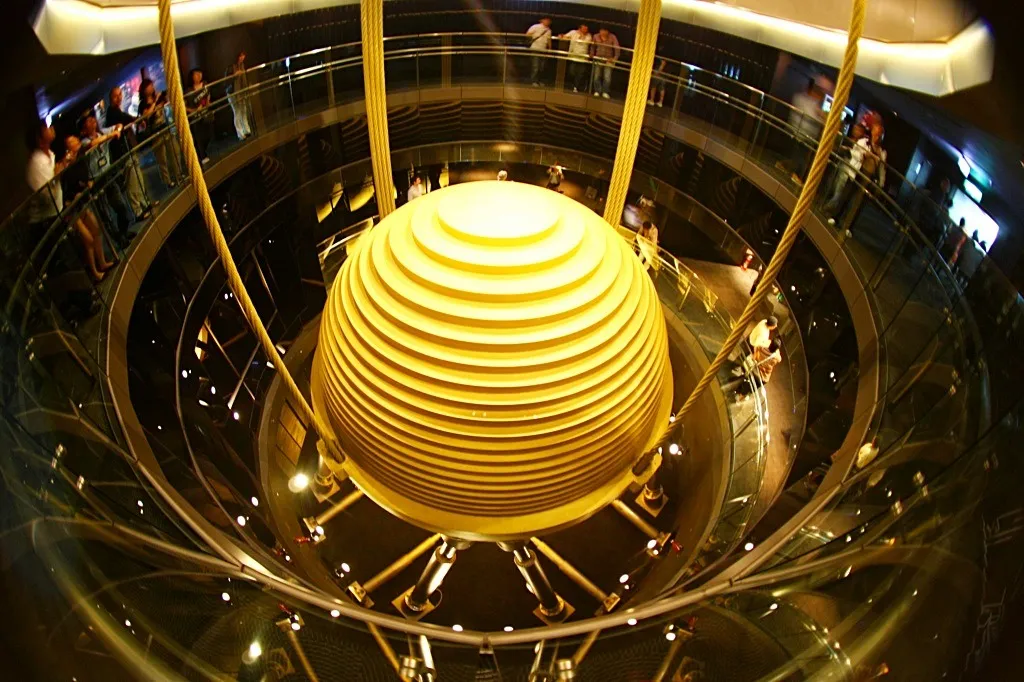
730 tons of steel suspended on the 87th floor. It doesn't prevent the earthquake. It absorbs it.
Your architecture should do the same.
Designing Systems that Work is Easy, Systems that Withstand, Not So Much
After more than 20 years designing architectures in different types of organizations, the same pattern repeats itself:
- Teams that invest millions in redundant infrastructure
- Replicated servers
- Automatic backups
- Multiple availability zones
And when the real failure arrives… everything falls together, like a house of cards.
Why?
Because redundancy ≠ resilience.
Redundancy = having copies. If something is missing, you have a backup.
Resilience = the system keeps working even if something fails. It degrades, but doesn't collapse.
It's the difference between a building with thick walls and one with seismic dampers.
Resilience as a Non-Functional Requirement
The turning point was applying ISO/IEC 25010 not as a checklist, but as a design language.
It defines four things that should be requirements from day zero:
- Reliability: how many transactions complete successfully?
- Availability: how much downtime can I afford? (RTO)
- Fault tolerance: when something fails, does the rest continue?
- Recoverability: how much data do I lose? (RPO)
When these conversations stop being technical and become "how much does each minute of downtime cost us?", the business listens differently.
Designing with Failure in Mind
A developer thinks "let's hope this doesn't go down". An architect must think "let's build a resilient system and measure its actual resistance".
That changes everything:
- Decisions justified by numbers, not intuition
- Teams aligned on the "why"
- Architectures that withstand real pressure because they're prepared to handle the unexpected, not to avoid it